
On Floor Crossings
Plus the Conservative motion to cut fuel taxes, April 13 byelection results, and this week's committee highlights.

I wanted this week to address the parliamentary practice of floor crossings. There have been five floor crossings within the first year of this Parliament and I have received a fair amount of feedback, concerns and frustration at the practice. Crossing the floor from one party to another has been a longtime practice of Westminster parliamentary system like our own. That does not mean that just because its allowed that it is moral or ethical; it just means its happened in the past. MPs are elected directly by residents in a riding. The Elections Canada Act allows a political party to endorse a candidate in every riding. Each political party has leaders that are popular or unpopular. This being said, voters choose any number of factors on why they vote for the candidate they prefer and usually it’s a combination of factors including the person whose name is on the ballot, the political party, the promises in the campaign platform, the leader of the political party and also those other choices on the ballot.
Now let me be direct: I will never cross the floor. Never.
I have not been approached or encouraged by any Liberal MP. I would rather lose as a conservative than win as a liberal. I believe in conservative ideals of temperance, slow social change that is more adaptation than revolution, and generally to have the government out of your affairs as much as possible.
Residents and conservative pundits have called for ending floor crossing by legislation. Such legislation was tried in at least one province I am aware of, Manitoba, and it did not work and it was abolished in the last 15 or so years. Moreover, anti-floor crossing legislation is easy to circumvent. An MP could leave their political party or be expelled and sit as independent while getting their voting sheets from their new political party preference, invited to caucus weekly at the Wednesday morning meetings and overall be involved like any other MP of that political movement. This fixes nothing then. Inducements to floor cross are of course illegal, and monetary benefits are a direct contravention of the Standing Orders of Parliament and not just the criminal code. One of my biggest concerns about banning floor crossings is that it would give incredible powers over the political life of an MP to their party leadership that can then enforce voting along party lines all the time. Now most votes are along party lines but at least in the conservative team on Parliament Hill there is extensive debate and conversations before a vote ever happens to sort out a party position. We have more free votes than any other party. My voting record proves I have voted against my political party, on several private member’s bill notably, to vote on what I believed was the right position or where constituents wanted me to go. Giving more authority and power to party leaderships of all stripes does not improve the health of our Parliament.
Again, this does not mean I like the floor crossings or that I agree with any of the public reasons given for the five who have crossed the aisle this far into the current Parliament. Those MPs should have to justify themselves to their constituents daily and weekly from now until whenever the next general election is held. Their feet should be held to the proverbial fire. Journalists and advocates should be chasing them down to get answers out of them on why they did so. Not all floor crossings are the same either. Crossing the floor from the opposition to the government takes little courage. You go from the difficult work of opposing with limited resources requiring MPs to do incredible yeoman’s work by themselves with small staffs to the loving embrace of the government caucus which has tens of thousands of public servants waiting to be directed by cabinet ministers to lend help to MPs to sort out files of interest. Crossing the floor from the government to the opposition is willingly choosing the wilderness, the hard road, the tough path and that takes more bravery than the reverse.
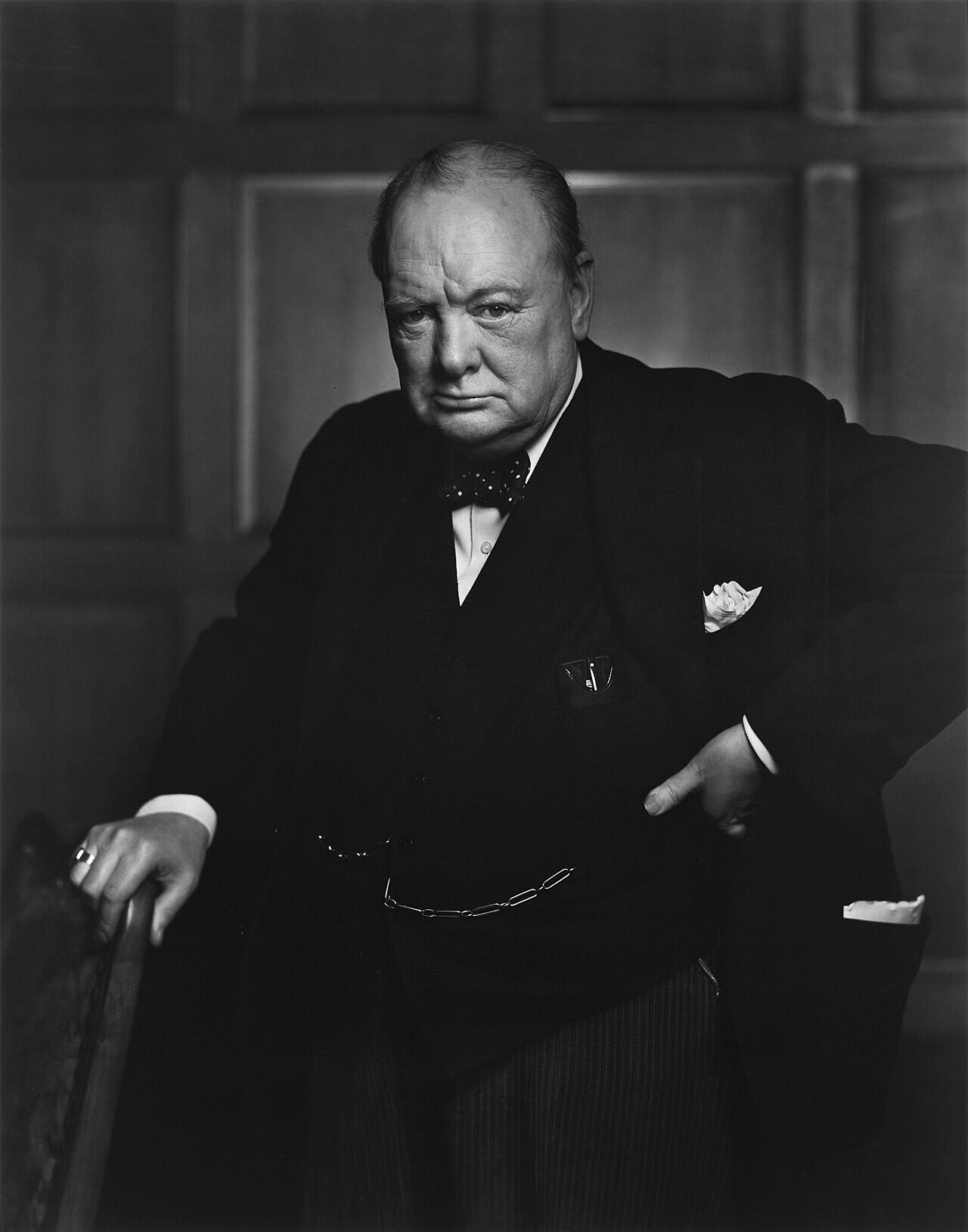
For conservative voters and supporters, I also want to raise this important historical points, many of us easily claim Sir Winston Churchill as one of the great leaders of the conservative movement, a model statesman and a parliamentarian before all others. And he crossed the floor. Twice. Both on matters of principle. Both times he was heavily criticized then mocked for his actions. He said he ratted then re-ratted and defended his actions as principle over careerism. I would encourage then everyone to watch the arguments and reasons given by the floor crossers in debates in Parliament and outside on the streets of Canada. They will have months and years, perhaps decades, of answering for their actions.
I was elected a conservative MP. I will remain one. Calgary Shepard residents will pass judgment on my performance at the next general election. I welcome it.
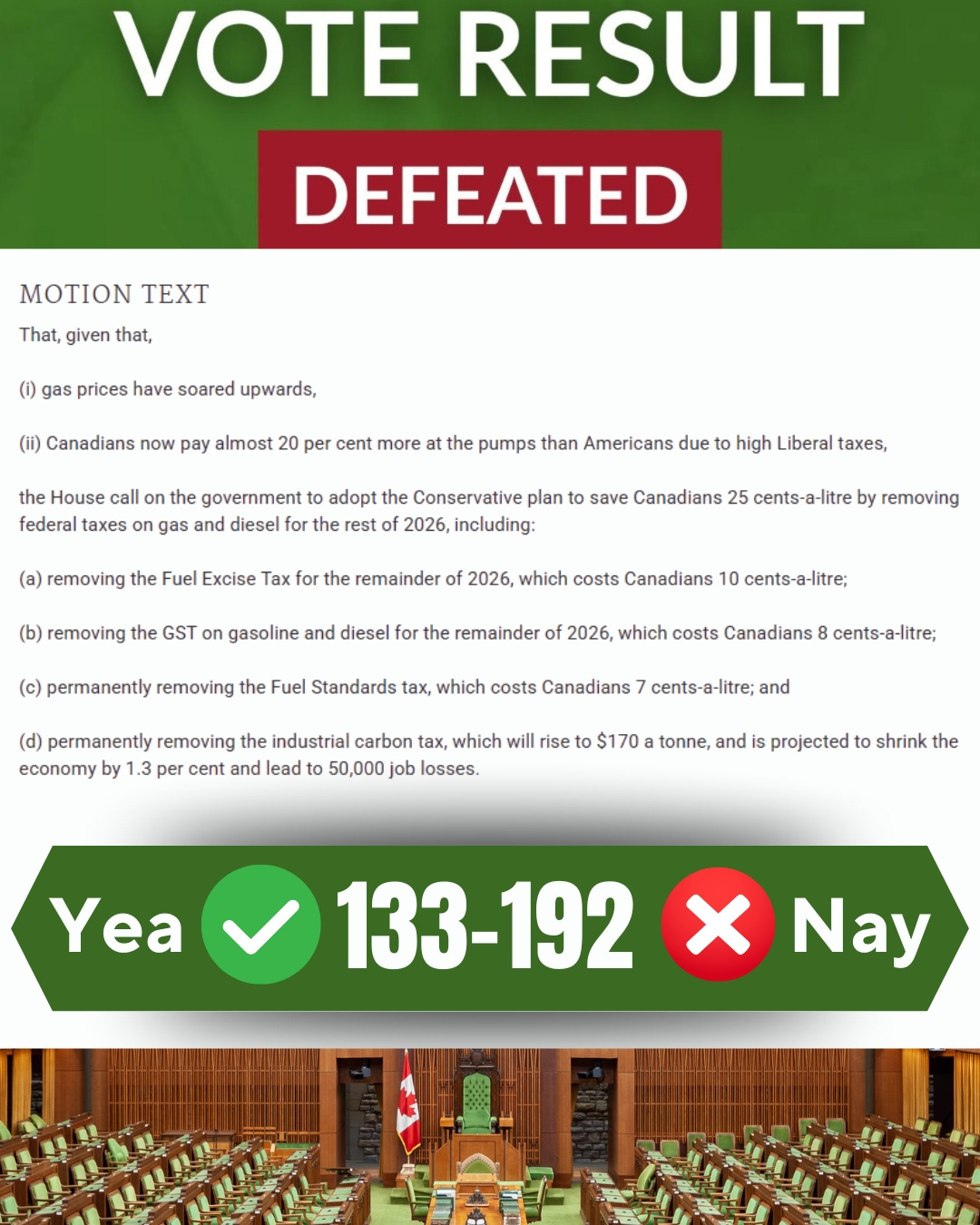
This week, Parliament voted on a conservative opposition motion calling on the federal government to remove federal taxes on gasoline and diesel for the rest of 2026. The motion proposed saving Canadians 25 cents a litre by cutting four federal levies: the fuel excise tax (10 cents/litre), the GST on fuel (8 cents/litre), the fuel standards tax (7 cents/litre), and the industrial carbon tax. It was defeated 192–133. Every Conservative MP voted yes. Every government MP voted no, joined by the Bloc and the NDP.
The backdrop matters. Gas prices in Canada have soared in recent weeks, largely due to the conflict in the Middle East disrupting global oil supply. But the motion made a pointed argument: global events explain why prices are high everywhere, not why Canadians are paying nearly 20 percent more at the pump than Americans. That gap, the motion argued, is the direct result of federal taxes that other countries simply do not impose.
Two days before the vote, the federal government announced it would suspend the federal fuel excise tax, 10 cents a litre, from April 20 until Labour Day. That announcement came after weeks of Conservative pressure and with a vote on this motion looming. The federal government’s measure covers one of the four taxes the motion addressed. The motion called for all four to go, and for two of them, the fuel standards tax and the industrial carbon tax, to be removed permanently, not just for a summer.
The industrial carbon tax is a particular point of contention. It currently applies to large industrial emitters and is projected to rise to $170 a tonne. The motion cited Parliamentary Budget Officer analysis projecting it will shrink the economy by 1.3 percent and lead to 50,000 job losses. That cost falls on industries like trucking, agriculture, and manufacturing, and eventually on the prices Canadians pay for goods. The concern runs deeper than the pump price. Industry leaders speaking at a major energy conference in Toronto this week were direct about what the tax means for Canada’s position as a global energy supplier. The head of the Canadian Association of Petroleum Producers pointed out that no other oil and gas producing or exporting nation in the world imposes an industrial carbon tax on its producers. The Cenovus CEO, who chairs the CAPP board, argued the levy doesn’t drive investment in cleaner technology, it simply makes Canadian energy more expensive to produce than its competitors abroad. The logic follows: if the tax pushes production costs up without a corresponding reduction in global demand for oil, the output doesn’t disappear, it just comes from somewhere else, with fewer Canadian jobs attached to it. This is a live issue for Alberta, which sits on the fourth-largest proven oil reserves in the world. At a moment when global supply is tight and markets are actively looking for reliable suppliers, the question of whether federal policy is helping or hindering Canada’s ability to step up is a legitimate one.
The motion did not pass, but it put a clear question on the record: is the federal government willing to address the full tax burden on fuel, or only part of it, and only temporarily? For residents in Calgary Shepard who fill up regularly, whether commuting across the city or running a small business, that distinction matters.
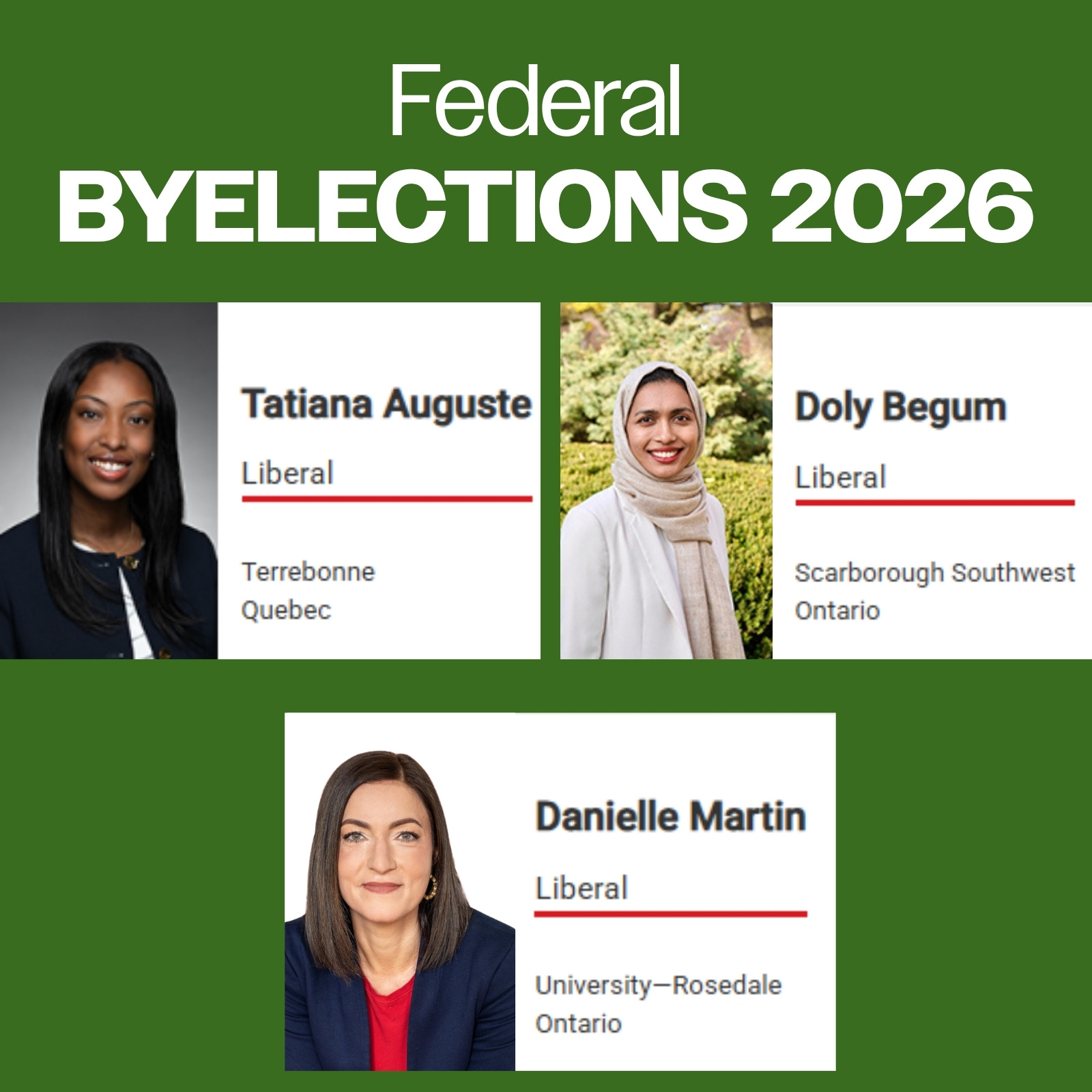
On Monday, April 13, three federal byelections were held in University-Rosedale and Scarborough Southwest in Toronto, and in Terrebonne, Quebec. The governing party won all three. Going into Monday’s races with 171 seats, the wins push the seat count to 174, crossing the 172-seat threshold needed for a majority in the 343-seat Parliament.
What changes with a majority is straightforward. The new MPs will have to wait several weeks before the writs are returned to Parliament, the results are confirmed by the Speaker and they are sworn in to be able to vote. Once that happens, the federal government will be able to pass legislation and survive confidence votes without relying on any other party. It will also very likely move to take majority control of parliamentary committees, which currently have more opposition members than government ones. Conservatives have warned that Liberal majority control of committees will shut down opposition efforts to secure transparency and accountability. That is a real concern, committees are where legislation gets scrutinized line by line, where witnesses are called, and where the government’s record gets examined.
I would note here that strong minority government short a handful of MPs to form a majority are difficult to manage and the next most difficult is tight majorities of only a handful of seats. This means no MP can miss a vote for business or family reasons. Flight delays and international travel comes with added risks. Retirements and departures for provincial elections or other political offices means this majority could be temporary.
What Else Happened This Week in Parliament:
Veterans Affairs Committee: continued its study on barriers to entrepreneurship among veterans, hearing from veteran-owned businesses and veteran entrepreneurship supports. Witnesses pointed to recurring obstacles like limited access to capital, weak mentorship and hiring supports, procurement barriers, no clear “front door” to available programs, and uncertainty about how business income interacts with VAC benefits. Some also flagged added credibility and funding barriers for women and non-commissioned veterans.
Justice Committee: MPs continued their study of Bill C-16, hearing testimony on coercive control, femicide, deepfakes, publication bans, sexual history evidence, sentencing, and victims’ rights. Witnesses broadly supported stronger protections but emphasized implementation risks calling for clearer definitions, training, and practical safeguards to avoid unintended harms as well as added delays.
Public Accounts Committee: MPs examined the Auditor General’s report on Canadian Armed Forces housing and later reviewed the Main Estimates for the Office of the Auditor General, with discussion on audit modernization and ongoing challenges accessing information (including from Crown corporations). The committee also heard from the Bank of Canada on financial reporting and pandemic-era losses tied to interest-rate changes.
Finance Committee: MPs resumed a study on household debt, hearing from the Financial Consumer Agency of Canada and officials from the Superintendent of Bankruptcy and Statistics Canada, with witnesses describing growing strain from rising debt levels and non-mortgage borrowing. MPs later heard from CPP Investment Board representatives on Canada Pension Plan investments in Canada and broader questions about domestic investment opportunities.
Industry and Technology Committee: continued its AI study with witnesses from the Vector Institute, Next Generation Manufacturing Canada, and major telecom and AI firms, focusing on adoption in strategic industries, productivity, sovereign compute capacity, and cybersecurity. MPs also held a meeting on federal EV policies, hearing from clean transportation, supply chain, and technical as well as security-focused witnesses about competitiveness, connected-vehicle risks, and safeguards tied to foreign technology.
Natural Resources Committee: MPs continued a study on Canadian energy exports, hearing from industry, Indigenous leadership, and federal regulators, with discussion focused on export infrastructure (including LNG and pipeline capacity), Indigenous participation, and whether federal policy is enabling Canada to reach global markets. The committee later heard additional testimony from energy and hydrogen organizations and Hydro-Québec’s U.S. energy services arm on market access as well as export opportunities.
Canadian Heritage Committee: MPs examined the Online News Act framework and the distribution of funds from digital platforms, including testimony from the Canadian Journalism Collective and related organizations on governance as well as allocation methods.
International Trade Committee: MPs continued their study of Canada’s trade with North and West Africa, and unanimously adopted a motion requesting that the Minister of Finance extend the Ukraine Goods Remission Order window to 2031, respond in writing within 15 days, and that the Chair report this to Parliament. Later in the week, MPs examined internal free trade within Canada, hearing from business and manufacturing groups, departmental and PCO officials. They also heard from the minister responsible for Canada–U.S. trade, with discussion focused on barriers inside Canada and practical steps toward a more integrated internal market.
Government Operations and Estimates Committee: MPs continued reviewing the government’s comprehensive expenditure review, hearing from finance officials and then union representatives. Discussion focused on whether the exercise is producing measurable savings versus reallocations, how impacts are assessed across regions and services, and implications for frontline capacity in areas like corrections and public safety.
Foreign Affairs Committee: MPs studied Syria’s political transition and heard testimony on minority protections, decentralization, humanitarian needs, and what conditional engagement could look like in a fragile security environment. Later, MPs reviewed Canada’s Indo-Pacific Strategy with senior Global Affairs, National Defence, and Canadian Armed Forces officials, including security and operational considerations across the region.
Environment Committee: MPs heard from senior officials on the Electric Vehicle Availability Standard, with departments outlining the regulatory approach and implementation considerations.
Science and Research Committee: MPs examined the implications of the Canada–China preliminary joint arrangement on Canada’s EV sector, hearing from former diplomats, policy organizations, and the Privacy Commissioner’s office. Discussion focused on industrial strategy, national security considerations, and data and privacy governance.
Ethics Committee: MPs continued the statutory review of the Lobbying Act, hearing from the B.C. Registrar of Lobbyists and OECD officials on transparency, enforcement tools, and international best practices in lobbying regulation.
Health Committee: MPs received a briefing from the Canadian Centre on Substance Use and Addiction, hearing from its leadership and board on substance-use trends, policy considerations, and program delivery challenges.
Hi Tom, I would also add that there was a private members bill in 2011 in the Canadian Parliament that, if passed, would have required a floor crossing MP to stand down for a by-election. The bill was spoken against by Michelle Rempel Garner and Scott Reid, both Conservatives. Upon the vote, the record shows that Pierre Poilievre, Jason Kenney, and Ms Rempel along with what looked like the entire Conservative party voted against it. According to thoughts from the conservative speeches at the time, it would unduly restrict the freedom of the MP. I believe the Liberals also voted and spoke against it. It was put forth by a NDP member.
I totally disagree with the concept of floor crossing. My position is that a byelection should be called immediately, in order to confirm that the MP’s constituents agree with his decision.